
If you’re wondering how many cubic feet in a 40ft container, you’re likely planning a shipment, estimating storage requirements, or comparing container sizes. Understanding the cubic capacity of a shipping container is essential because it determines how much cargo, inventory, equipment, or household goods can fit inside.
A standard 40-foot shipping container is one of the most widely used container sizes in global logistics. Businesses rely on these containers to move products across oceans, store inventory, and transport goods efficiently.
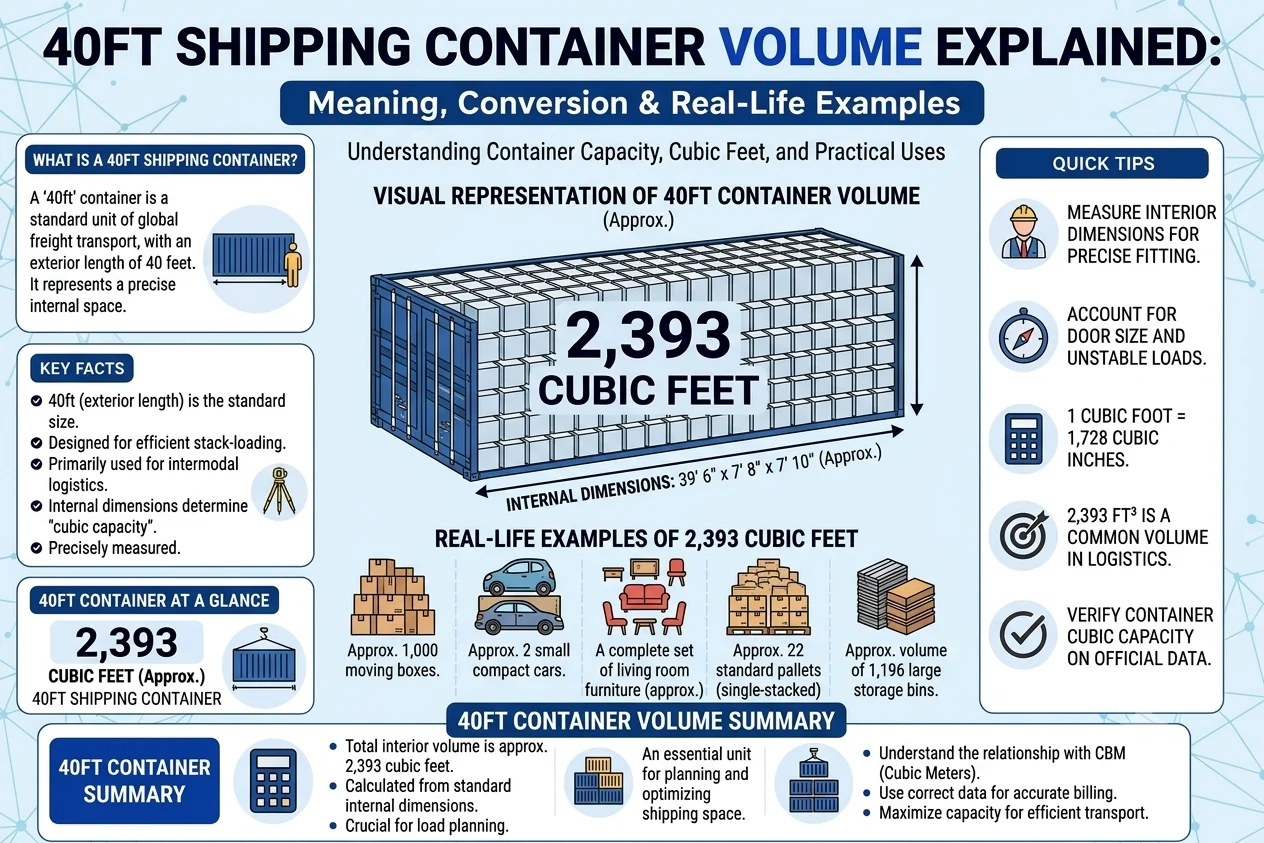
The short answer is that a standard 40ft shipping container holds approximately 2,390 cubic feet of internal volume. However, the exact amount of usable space depends on container type, cargo shape, packaging methods, and loading techniques.
This guide explains the cubic footage of a 40ft container, how the volume is calculated, practical uses, comparisons with other container sizes, and tips for maximizing storage capacity.
Quick Answer
A standard 40ft shipping container provides approximately:
2,390 cubic feet of internal storage space
Typical internal dimensions are:
- Length: 39.5 feet
- Width: 7.7 feet
- Height: 7.9 feet
Multiplying these dimensions produces a volume of approximately 2,390 cubic feet.
Understanding Cubic Feet and Container Volume
Before calculating container capacity, it’s helpful to understand what cubic feet means.
A cubic foot measures volume rather than area.
One cubic foot equals:
- 12 inches wide
- 12 inches long
- 12 inches high
When calculating shipping container capacity, cubic feet represent the total three-dimensional storage space available inside the container.
Volume is important because it helps determine:
- Cargo capacity
- Shipping efficiency
- Storage planning
- Freight costs
- Inventory management
How Many Cubic Feet in a 40ft Container?
The standard answer is:
Approximately 2,390 cubic feet
Most shipping companies list the internal volume between:
- 2,385 cubic feet
- 2,390 cubic feet
depending on manufacturer specifications.
Standard Container Capacity
A standard 40ft container offers substantial storage space for:
- Commercial products
- Household goods
- Industrial equipment
- Construction materials
- Retail inventory
This size is often preferred because it balances cargo capacity and transportation efficiency.
Internal Dimensions
Typical interior measurements include:
| Dimension | Measurement |
|---|---|
| Length | 39.5 ft |
| Width | 7.7 ft |
| Height | 7.9 ft |
These dimensions can vary slightly by manufacturer.
Volume Calculation
The basic formula is:
Length × Width × Height = Cubic Feet
Using average dimensions:
39.5 × 7.7 × 7.9 = approximately 2,390 cubic feet
Standard 40ft Container Dimensions
Understanding the physical dimensions helps visualize the available space.
| Feature | Standard 40ft Container |
|---|---|
| Exterior Length | 40 ft |
| Exterior Width | 8 ft |
| Exterior Height | 8.5 ft |
| Interior Length | 39.5 ft |
| Interior Width | 7.7 ft |
| Interior Height | 7.9 ft |
| Volume | ~2,390 cu ft |
The difference between exterior and interior dimensions comes from wall thickness and structural components.
High Cube vs Standard 40ft Containers
Many people compare standard containers with high cube containers.
| Container Type | Cubic Feet |
|---|---|
| 20ft Standard | ~1,170 |
| 40ft Standard | ~2,390 |
| 40ft High Cube | ~2,690 |
A high cube container is approximately one foot taller than a standard container.
This extra height adds roughly:
- 300 additional cubic feet
making it ideal for lightweight but bulky cargo.
What Can Fit Inside a 40ft Container?
A 40ft container can hold an impressive amount of cargo.
Examples include:
Household Moves
A 40ft container can typically accommodate:
- Contents of a 4–5 bedroom house
- Furniture
- Appliances
- Personal belongings
Vehicles
Many containers can fit:
- Two standard cars
- Multiple motorcycles
- ATVs
- Small utility vehicles
Business Inventory
Businesses often use 40ft containers for:
- Retail products
- Manufacturing supplies
- Seasonal inventory
Construction Materials
The container can store:
- Lumber
- Pipes
- Tools
- Equipment
Common Uses for a 40ft Shipping Container
Because of its large capacity, the 40ft container serves many purposes.
International Shipping
Global trade depends heavily on 40ft containers.
They transport:
- Electronics
- Clothing
- Machinery
- Consumer goods
Storage Solutions
Businesses use containers for temporary or long-term storage.
Construction Sites
Contractors often convert containers into secure storage facilities.
Agricultural Operations
Farmers store:
- Equipment
- Feed
- Supplies
inside shipping containers.
Benefits of a 40ft Container
Several advantages make this size popular.
Large Storage Capacity
Nearly 2,390 cubic feet provides substantial room for cargo.
Cost Efficiency
Transporting more goods per shipment often lowers costs.
Versatility
Containers can be used for:
- Shipping
- Storage
- Workshops
- Offices
- Modular buildings
Durability
Most containers are built from steel and designed to withstand harsh environments.
Factors That Affect Usable Cubic Feet
Although the container may offer 2,390 cubic feet, not all of that space is always usable.
Factors include:
Packaging
Large boxes may create empty gaps.
Cargo Shape
Irregularly shaped items reduce packing efficiency.
Weight Restrictions
Volume may be available even when maximum weight capacity is reached.
Loading Techniques
Poor loading practices waste valuable space.
Loading Tips for Maximum Efficiency
To maximize container capacity:
- Load heavier items first
- Use uniform box sizes
- Stack safely to full height
- Eliminate empty gaps
- Secure cargo properly
- Distribute weight evenly
These techniques improve both safety and space utilization.
Common Mistakes When Estimating Container Capacity
Avoid these common errors:
Ignoring Internal Dimensions
Always use interior measurements when calculating storage volume.
Forgetting Packaging Space
Boxes and pallets take up more room than many people expect.
Assuming 100% Usable Space
Structural components and loading requirements reduce usable capacity.
Overlooking Weight Limits
A container may run out of weight allowance before volume is fully utilized.
40ft Container Comparison Chart
| Container Type | Cubic Feet |
|---|---|
| 10ft Container | ~560 |
| 20ft Container | ~1,170 |
| 40ft Container | ~2,390 |
| 40ft High Cube | ~2,690 |
| 45ft High Cube | ~3,040 |
This comparison helps determine the best container size for your needs.
Conclusion
If you’re asking how many cubic feet in 40ft container, the standard answer is approximately 2,390 cubic feet. This large capacity makes the 40ft shipping container one of the most popular choices for international freight, business storage, household moves, and industrial applications.
Understanding container volume allows you to plan shipments more accurately, reduce wasted space, improve loading efficiency, and choose the right container size for your specific needs. Whether you’re shipping products across the world or storing equipment locally, a 40ft container provides substantial and versatile storage capacity.
FAQs
How many cubic feet does a standard 40ft container hold?
A standard 40ft shipping container holds approximately 2,390 cubic feet.
How many cubic feet are in a 40ft high cube container?
A 40ft high cube container typically provides around 2,690 cubic feet of storage space.
Can a 40ft container fit a household move?
Yes. A 40ft container can usually accommodate the contents of a 4–5 bedroom home.
What are the internal dimensions of a 40ft container?
Typical interior dimensions are about 39.5 feet long, 7.7 feet wide, and 7.9 feet high.
Why is usable space less than total cubic feet?
Packaging, cargo shape, loading methods, and weight restrictions can reduce the amount of practical storage space available.
Discover More
163 Centimeters Is How Many Feet?
How Many Feet Does a Rooster Have?
How Many Feet Is 0.6 Miles?